
Ghost of Yotei: Legends, Missions, and the Mystique Behind the Mountain
Video games often act as windows into worlds we can’t physically reach—places where myth, history, and pure imagination crash together.
Ghost of Yotei, the much-discussed spiritual successor to those popular Japan-inspired action titles like Ghost of Tsushima, is exactly one of those worlds. Drawing deep inspiration from the haunting beauty of Mount Yotei in Hokkaido, Japan, this game successfully blends ancient folklore with modern game design. Its mix of mythological storytelling, cinematic combat, and open-world freedom has quickly captured the interest of players worldwide.
Let’s explore what makes Ghost of Yotei such a fascinating creation—its origin, the way it plays, and the deeper mission hiding beneath its polished surface.
The Origin of the Legend
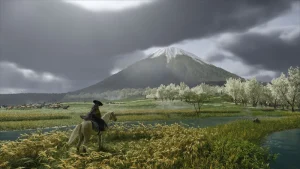
Mount Yotei, often referred to as “Ezo Fuji” due to its resemblance to Mount Fuji, is a volcano that dominates the landscape of Hokkaido. Constantly wrapped in clouds and surrounded by dense forests, it has always been central to local legends. Ancient tales speak of spirits dwelling in its mist, guarding secrets buried deep within its volcanic heart. These stories—of restless souls, divine protectors, and cursed warriors—were the foundation for Ghost of Yotei.
The developers reportedly started the game as a mix of Japanese folklore, samurai myth, and psychological storytelling. Instead of retelling history, they crafted a ghostly narrative that re-imagines the mountain as a liminal space between life and death—a place where the past simply refuses to die.
In the game’s lore, Yotei is much more than just a place; it’s a character. The mountain itself watches, remembers, and even speaks through the spirits that inhabit it. Players aren’t simply exploring its slopes—they are actively unraveling its memories.
Setting and Storyline
Ghost of Yotei is set during a time of chaos in an alternate feudal era, where the northern lands of Japan have fallen into ruin.
The story follows Raiden Kurose, a wandering warrior tormented by guilt and loss. When his village is destroyed by mysterious forces coming from Mount Yotei, Raiden commits himself to uncovering the truth behind the spectral curse gripping the land.
The central mystery is chilling yet beautiful: every night, an ethereal storm sweeps across the mountain, bringing with it the echoes of the dead—forgotten warriors, spirits seeking peace, and gods angered by human arrogance.
As Raiden travels deeper into Yotei’s forests and caverns, he must confront more than just monsters and rival clans; he must face his own inner ghosts. The story is just as much about redemption as it is about survival—a deep look at memory, honor, and the thin line between man and myth.
Gameplay and Core Mission
At its core, Ghost of Yotei is an open-world action-adventure game with a sharp focus on exploration, stealth, and cinematic combat. Players get to choose their approach for every encounter: either through confrontation with a blade and bow, or by using cunning and stealth in the shadows.
The main mission is all about uncovering the source of the curse gripping Yotei. Raiden has to track down relics called Spirit Seals, each one tied to a fallen guardian of the mountain. Every seal holds a fragment of the mountain’s memory, and breaking the curse means confronting each guardian in intense, ritual-like boss battles.
Every mission blends folklore right into the gameplay. For example, one mission might have you following a fox spirit through a moonlit forest to find a forgotten shrine, while another forces you to face a corrupted monk who uses illusions of past lives. These encounters are more than just fights—they are symbolic moments of storytelling through action.
As you progress, you unlock new spiritual abilities drawn from the souls you’ve laid to rest. Raiden’s connection to the supernatural deepens, letting him phase between the human and spirit realms, summon ethereal allies, or harness energy from nature itself.
The result is a layered gameplay experience that feels both intimate and epic—a beautiful balance between the realism of traditional samurai combat and the surreal, haunting atmosphere of Japanese myth.
System Requirements and Technical Specs
While the official specifications have been updated since the game was announced, Ghost of Yotei was clearly designed for high-end consoles and PC platforms. The developers pushed for extreme realism and immersion, using next-generation graphics and environmental physics to bring Mount Yotei’s haunting landscape to life.
PC Requirements
To run the game, you’ll need at least an Intel Core i5-
9600K (or AMD Ryzen 5 3600) CPU, 16 GB of RAM, and an NVIDIA GTX 1660 Ti (or AMD Radeon RX 5600 XT) GPU. For the best experience, the developers recommend stepping up to an Intel Core i7-12700K (or AMD Ryzen 7 5800X), 32 GB of RAM, and a powerful NVIDIA RTX 3080 (or AMD Radeon RX 7900 XT). You should also have at least 100 GB of SSD storage available.
Console Experience
On next-gen consoles, the game targets 4K resolution at 60 frames per second, featuring dynamic weather, real-time lighting, and fully ray-traced reflections. The audio design—recorded using traditional Japanese instruments—dramatically boosts the immersion, making every gust of wind and whispering spirit a key part of the storytelling.
A Game About More Than Combat
Though Ghost of Yotei is visually stunning and mechanically rich, what truly sets it apart is its emotional core. It isn’t just a simple tale of vengeance—it’s about facing the cost of your own past and dealing with the weight of forgotten hi
story.
Between action-packed missions, players can experience quiet, reflective moments: you can write haiku at shrines, meditate under waterfalls, help villagers rebuild their homes, or honor fallen warriors. These pauses give the game a reflective tone, allowing you to feel deeply connected to both the land and its people.
The developers have described it as a “game about remembering”—a story where the ghosts you encounter aren’t just monsters to be slain, but painful memories to be understood.
Why It Resonates
In an age dominated by fast-paced shooters and futuristic settings, Ghost of Yotei stands out completely because of its atmosphere and depth. It perfectly bridges two worlds—the real and the spiritual—while exploring universal human the
mes like grief, legacy, and forgiveness.
Its combination of mythological storytelling, cinematic direction, and fluid gameplay has made it a powerful example of how games can truly function as art. Much like the mountain it’s set on, the game feels vast, beautiful, and utterly filled with secrets just waiting to be uncovered.
Conclusion: The Spirit of Yotei Lives On
Ghost of Yotei is much more than a ghost story—it’s a deep look at memory, nature, and redemption. Beneath all the sword fights and supernatural storms is a timeless message: to truly move forward, you must first make peace with your past.
The spirits of Mount Yotei might be fictional, but their echoes feel real. They remind us that legends, just like memories, never truly fade—they linger in the stories we tell and the worlds we build. And in that sense, Ghost of Yotei succeeds not just as a game, but as a haunting, beautiful reflection of the human spirit itself.