
Ghost of Tsushima: From History to Heroism — The Journey of Jin Sakai
Every once in a while, a game comes along that feels more like a living, breathing painting than a piece of software. Ghost of Tsushima, developed by Sucker Punch Productions, is exactly that kind of experience—a sweeping, emotional journey through feudal Japan that captures both the beauty and the brutality of a nation at war. It’s not just an action-adventure title; it’s an ode to honor, sacrifice, and the soul of the samurai
Let’s explore the origins of this masterpiece—where its story began, what its main mission represents, and the technical power that brings its stunning world to life. The prequel to Ghost of Yotei
Where the Story Originated
The story of Ghost of Tsushima is inspired by real events—specifically, the first Mongol invasion of Japan in 1274.
Tsushima Island, located between Japan and the Korean Peninsula, was one of the first Japanese territories to face the Mongol attack. Historically, the island’s defenders were hugely outnumbered, and their resistance became legendary.
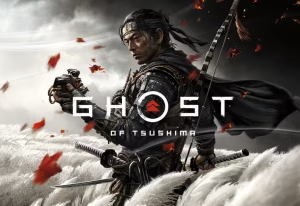
While the main character, Jin Sakai, is fictional, his personal struggle perfectly captures the real courage and tragedy of those who stood against the invaders. The game takes that historical inspiration and blends it with powerful emotional storytelling, effectively transforming history into myth.
Sucker Punch didn’t just read history books. The developers spent years deeply studying Japanese culture, landscape, and especially samurai cinema. They drew heavy inspiration from the films of Akira Kurosawa, particularly his poetic sense of honor, silence, and the visual contrast between serenity and chaos. In fact, the game even includes a special “Kurosawa Mode,” which lets players experience the entire adventure in black and white with film grain—a loving tribute to the golden age of Japanese cinema.
The Story and Setting
The story centers on Jin Sakai, a young samurai warrior and the last survivor of his clan after the Mongols destroy Tsushima.
Bound by his strict code of honor, Jin initially tries to defend his home as a traditional samurai—using face-to-face combat and putting honor above all else. But as he watches his people being slaughtered and villages being burned, he starts to question whether those old traditions can actually save his homeland.
That internal conflict becomes the heart of the story. Jin slowly changes from a samurai into the “Ghost”, a shadow-like symbol of rebellion who uses stealth, cunning, and fear to fight the enemy. This transformation is more than just a gameplay mechanic—it’s a
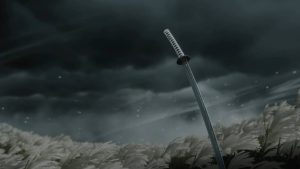
profound moral dilemma. Every step Jin takes toward becoming the Ghost is a step away from the code that once defined him.
The island of Tsushima itself feels like a character in the story. From golden fields of pampas grass to mist-covered bamboo forests and blood-red maple groves, the world is breathtaking. It encourages players not just to fight, but to reflect. Between battles, you can write haiku, meditate at shrines, or follow foxes to hidden temples—small, peaceful moments that beautifully contrast the harsh violence of the war.
The Main Mission
At its heart, Ghost of Tsushima tells a story about liberation and identity. The main quest follows Jin’s mission to take Tsushima back from the Mongols and rescue his uncle, Lord Shimura, who represents the last remnant of the old samurai tradition.
Every mission is designed to challenge both Jin’s combat skills and his conscience. Should he fight honorably, risking total defeat, or embrace stealth and deception to protect his people? The choice is never easy, and the game doesn’t punish you for taking either path—it simply reflects Jin’s gradual transformation into something entirely new.
Beyond the main story, Ghost of Tsushima is rich with side stories that deepen the emotional experience. These tales—of villagers seeking justice or monks questioning their faith—explore the human cost of war. Together, they weave a complex tapestry of courage, loyalty, and the haunting price of survival.
Gameplay Mechanics
The combat system in Ghost of Tsushima is a delicate balance of precision and artistry. Sword fights are fast, fluid, and deeply satisfying. Every single swing, parry, and dodge feels weighty and deliberate, which means the game rewards patience and timing instead of just button-mashing.
As you progress, Jin unlocks multiple combat stances, each one effective against a specific type of enemy—like shields, spears, or brutes. The game also encourages players to get creative with stealth: you can strike from the shadows, use smoke bombs, or simply terrify enemies with powerful Ghost weapons.
Exploration itself is seamless and organic. Instead of relying on cluttered maps or digital markers, the wind literally guides you. Players follow the direction of the gusts to reach their objectives, creating an incredibly immersive and poetic navigation system that fits the game’s atmosphere perfectly.
System Requirements and Technical Specs
Ghost of Tsushima first came out on the PlayStation 4 in 2020, was later optimized for the PlayStation 5, and finally made its way to PC in 2024. The PC release brought stunning graphical upgrades, including unlocked frame rates, ultra-wide monitor support, and detailed ray-traced lighting.
PC Requirements
To run the game, you’ll need at least an Intel Core i5-8600K (or AMD Ryzen 5 3600) CPU, 16 GB of RAM, and an NVIDIA GTX 1660 (or AMD RX 5600 XT) GPU. You’ll need 75 GB of storage, with an SSD highly recommended.
For the best experience, the developers recommend stepping up to an Intel Core i7-12700K (or AMD Ryzen 7 5800X), 32 GB of RAM, and a powerful NVIDIA RTX 3070 (or AMD RX 6800 XT) GPU.
Console Experience
On the PlayStation 5, the game runs at a crisp 4K resolution at 60 frames per second, complete with near-instant loading times and enhanced textures. Crucially, the DualSense controller’s adaptive triggers make archery and swordplay feel physically tactile—each clash of steel vibrates with cinematic intensity.
The Deeper Meaning Behind the Game
Beneath all the combat and cinematic beauty, Ghost of Tsushima carries a profound message. It’s not just a war story—it’s ultimately about change. Jin’s journey perfectly captures the constant tension between tradition and innovation, a theme that resonates far beyond feudal Japan.
The game also beautifully celebrates Japanese culture and spirituality. From Shinto shrines and tea ceremonies to the deep respect for nature embedded in every detail, Ghost of Tsushima fully immerses players in a world where beauty and brutality coexist.
Every blade of grass, every gust of wind, and every sunset feels intentional—a reflection of mono no aware, the Japanese appreciation for fleeting beauty. It’s rare for a game to evoke such powerful emotion simply through its landscapes.
Conclusion: A Masterpiece of Honor and Humanity
Ghost of Tsushima is more than just a samurai game—it’s a deep look at what it truly means to fight for your home and your own soul.
Through Jin Sakai’s transformation from the traditional samurai into the stealthy Ghost, the story asks a timeless question: Can you protect what you love without losing who you are?
Its stunning visuals, heartfelt storytelling, and graceful combat make it one of the most memorable experiences in modern gaming. Like the haiku Jin writes beneath the falling leaves, Ghost of Tsushima reminds us that even when facing destruction, beauty endures—and honor, though fiercely tested, never truly dies.