
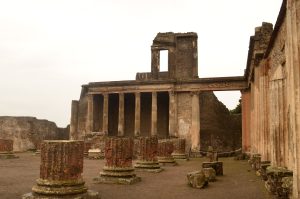
Lost Civilizations: What Ancient Cultures Can Teach the Modern World
Throughout history, entire civilizations have risen, flourished, and then vanished—leaving behind only fragments of stone, symbols, and whispered stories.
From the silent, overgrown temples of the Maya to the submerged ruins of Dwarka and the mythical echoes of Atlantis, these lost cultures continue to fascinate us. But beyond the sheer mystery and grandeur, these ancient societies offer something far more valuable than gold: crucial lessons about innovation, resilience, and the fragility of human progress.
The Mystery of Forgotten Worlds
The term “lost civilization” makes us picture overgrown cities swallowed by jungles or ancient harbors buried under the sand. But these places were once thriving centers of human creativity and knowledge.
Societies like the Indus Valley, the Maya, the Minoans, and the Nabataeans built huge cities, developed writing, engineered complex trade routes, and pushed science forward long before modern nations even existed.
What makes their stories so haunting isn’t just that they disappeared—it’s how much they accomplished before their decline. The Indus Valley people had indoor plumbing and urban planning over 4,000 years ago. The Maya were such precise astronomers that they could predict eclipses centuries ahead of time. The Nabataeans carved entire cities, like Petra, into solid rock mountains.
And yet, all of them eventually vanished or collapsed. Their ruins whisper the same powerful truth: progress is not permanent, and knowledge can be lost as easily as it is gained.
Lessons in Innovation
Ancient civilizations were masters of adaptation. They thrived not because they had unlimited resources, but because they learned to live intelligently within their environment.
Look at the Inca Empire, for instance. Stretched across the Andes Mountains, they faced impossible terrain and unpredictable weather. Yet, they engineered vast agricultural terraces that prevented soil erosion and used intricate irrigation systems to grow crops at various altitudes. Their stone bridges, roads, and communication networks were as impressive as anything built in pre-industrial Europe.
The Indus Valley Civilization—in present-day Pakistan and northwest India—showcased massive early urban engineering. Their cities, like Harappa and Mohenjo-Daro, had uniform building standards, highly efficient drainage, and public baths. This was a civilization designed not for display, but for the collective good.
These examples prove that technology and sustainability can absolutely coexist. Ancient societies didn’t try to dominate nature—they collaborated with it. At a time when the modern world is struggling with environmental crises, their wisdom feels more relevant than ever.
The Fragility of Greatness
History also teaches us that no civilization, no matter how advanced, is immune to decline.
Droughts, disease, internal conflict, and social inequality have toppled even the mightiest empires. The Maya, for example, likely faced an ecological collapse after deforestation and overpopulation strained their resources. The Romans, despite all their brilliance, eventually fell victim to political corruption and internal decay.
It’s easy to look at these stories as ancient tragedies, but they are powerful warnings for us today. Our modern, globalized world relies on incredibly fragile systems—climate stability, trade, energy, and technology. These ancient collapses demonstrate how quickly complex systems can unravel when the balance between a society and its environment is lost.
The archaeologist Joseph Tainter suggested that civilizations don’t fall from one single catastrophe, but from the sheer weight of their own complexity. As societies become more advanced, they demand more resources and coordination. Eventually, the cost of maintaining that complexity outweighs its benefits. The lesson is timeless: our progress must always be balanced by humility and foresight.
Wisdom Beyond Technology
It’s easy to measure advancement by technology, but ancient cultures were also rich in spiritual and philosophical insight. They understood something modern society often overlooks: that human beings are part of a larger cosmic and ecological web.
For example, the Ancient Egyptians saw life and death as part of a continuous cycle, not a straight, linear journey. Their focus on the afterlife wasn’t morbid—it showed a deep respect for continuity, memory, and purpose.
The Maya calendar was more than just a way to keep time; it was a model of cosmic balance. The Hindu concept of Yugas (cycles of ages) suggests that history itself moves through repeating patterns of growth and collapse. These worldviews offered powerful psychological resilience—a way to find meaning even when facing great uncertainty.
In our data-driven age, this kind of wisdom feels strangely rare. We know how to build skyscrapers that touch the clouds, but we still struggle to build societies that nurture empathy and balance. Lost civilizations remind us that intelligence isn’t only about invention—it’s also about understanding our place in the universe.
The Persistence of Mystery
Despite all our technology, some ancient questions are still completely unanswered.
How did the builders of Stonehenge move those massive stones across miles without modern machinery? What really caused the sudden, peaceful decline of the Indus cities, which left behind no clear signs of war or catastrophe? Did the Minoans truly perish in a huge volcanic explosion, or did their trade simply dry up?
These mysteries remind us that our knowledge has limits—and that curiosity is vital. Every new archaeological discovery doesn’t just teach us about the past; it reveals just how much we still don’t know about ourselves.
What They Teach Us Today
Lost civilizations aren’t failures of history—they are our greatest teachers. Their stories force us to pause and reflect on the choices we’re making right now.
They teach us humility, proving that even our greatest achievements can crumble. They teach us ingenuity, reminding us that human creativity often flourishes best under constraint. And they teach us interconnection, showing that survival depends on balance—with nature, with our neighbors, and with time itself, not on domination.
Perhaps the most valuable lesson of all is this: civilizations may eventually fall, but knowledge can endure, if we care enough to preserve it and actually learn from it.
Conclusion: Echoes That Still Speak
When we walk among the ruins of ancient temples or trace the outlines of forgotten cities, we aren’t just studying history; we are seeing our reflection. The same hopes and fears that built those civilizations live inside us today.
Their stones may have completely worn away, but their wisdom hasn’t. It lingers in our architecture, our philosophies, and our dreams of building something that will last. The civilizations of the past aren’t truly gone. They’re whispering through time, reminding us that the real measure of progress isn’t how high we build, but how deeply we understand ourselves and our place in the world.