
The Unknowns of the Universe: Exploring the Greatest Mysteries Beyond the Stars
For all our powerful telescopes, satellites, and space probes, we still stand right on the cosmic shore, staring out into an endless ocean of mystery. The universe is incredibly vast—so vast that even our boldest scientific estimates barely scratch the surface. Yet, the more we learn, the more urgent questions keep popping up.
What exactly lies beyond the furthest galaxy we can see? Is there other life out there? What is the universe actually made of, and how did it all begin?
In a sense, the greatest adventure humankind has ever undertaken isn’t here on Earth—it’s the one unfolding silently right in the stars above us.
The Infinite and the Unknowable
Let’s start with a fact so huge it’s nearly impossible to wrap your head around: the observable universe stretches roughly 93 billion light-years across. Light—the fastest thing in existence—would take 93 billion years to travel from one side to the other. And remember, that’s just the part we can see. Beyond it lies a realm we’ll likely never reach, where even more galaxies, stars, and maybe other realities drift unseen.
But here’s where it gets truly strange. Scientists believe that most of the universe is made up of stuff we can’t even detect directly. The atoms that form everything we know—from people to stars—account for less than 5% of the universe. The rest is an invisible mystery made of two things called dark matter and dark energy.
The Shadows We Can’t See: Dark Matter and Dark Energy
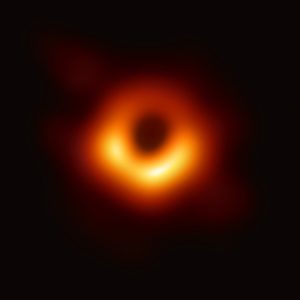
Dark matter is one of the universe’s greatest enigmas. We can’t see it, touch it, or measure it directly — yet we know it’s there because of its gravitational pull. Galaxies spin so fast that they should tear themselves apart, yet something unseen holds them together. That “something” is dark matter. It makes up about 27% of the universe, and it acts like a cosmic web that keeps galaxies from drifting away into nothingness.
But if dark matter is mysterious, dark energy is even more baffling. It’s an invisible force pushing the universe to expand faster and faster. Imagine throwing a ball into the air — instead of slowing down and falling back, it speeds up endlessly. That’s what our universe is doing. And we have no idea why.
Together, dark matter and dark energy make up 95% of everything, yet we don’t know what they are. It’s as if we’ve been handed a book with only the first page visible — the rest is hidden in darkness.
The Birth of Everything
To even begin to understand the universe’s unknowns, we have to look way back—about 13.8 billion years—to the Big Bang.
It wasn’t actually an explosion in space, but rather the sudden expansion of space itself. From something smaller than an atom, the entire cosmos began stretching outward, cooling down, and forming the first particles, stars, and galaxies.
But the Big Bang isn’t the whole story. What came before it? Did the universe truly begin from nothing, or was something there beforehand?
Physicists have proposed wild theories—from “cosmic inflation” (where space ballooned rapidly from a tiny seed) to the “multiverse” (where our universe is just one of countless others). Yet, no telescope or experiment has found any conclusive answers. The universe guards its origins like a secret, whispered across billions of light-years.
The Possibility of Other Life
Perhaps the most tempting unknown of all is the question: Are we alone?
The universe holds at least 200 billion galaxies, and each galaxy may contain hund
reds of billions of stars—many with planets of their own. Statistically, it seems impossible that Earth is the only world with life. Astronomers have already found thousands of exoplanets, some orbiting in the “habitable zone,” where conditions might allow for liquid water—a key ingredient for life.
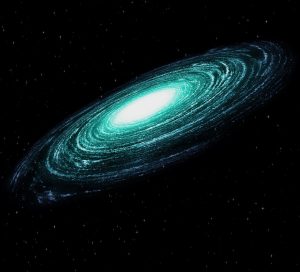
But despite decades of searching, we’ve found no confirmed signs of extra-terrestrial intelligence. No radio signals, no artifacts, no visiting spacecraft. The silence is eerie—so much so that it has a name: the Fermi Paradox, which asks why, in a universe so vast, we haven’t seen any evidence of anyone else yet.
Some scientists think intelligent civilizations exist but are just too far away for us to detect. Others suggest advanced species might self-destruct before they can reach us. And then there’s the possibility that we’re simply not listening in the right way—or aren’t truly ready to understand what we might find.
The Future of Exploration
Despite all these huge mysteries, our cosmic reach is definitely growing. Humanity has sent probes right out of our solar system, like Voyager 1, which is currently traveling through interstellar space carrying a golden record of Earth’s sounds and images—a message to anyone who might someday find it.
Telescopes like the James Webb Space Telescope (JWST) are peering farther into the past than ever before, capturing light from galaxies that formed just a few hundred million years after the Big Bang. These instruments are helping us unravel the story of how stars were born, how planets formed, and how matter itself evolved.
We’re also exploring closer to home: Mars rovers search for traces of ancient microbes, and missions to icy moons like Europa and Enceladus are planned to probe for hidden oceans beneath their frozen crusts. Every discovery, no matter how small, brings us closer to understanding our place in the cosmic story.
A Universe of Questions
The deeper we look into space, the more we realize that the universe isn’t a solved puzzle—it’s a living mystery. Every answer we get simply raises brand-new questions.
What exactly lies at the edge of black holes? Why does time only flow forward? Could there be other dimensions, completely invisible to us? And if the universe had a beginning, does it also have an end?
Even the simplest observation—the stars above—hides incredible complexity. Some of those lights we see may have already died millions of years ago; we’re just now receiving their ancient glow. In that sense, when we gaze at the night sky, we aren’t looking at the present—we’re looking at the past written in starlight.
The Wonder That Remains
Perhaps that’s exactly what makes the unknowns of the universe so compelling. They remind us that, for all our progress, we are still explorers—tiny, curious beings standing on a single rock, simply daring to try and understand infinity.
The universe doesn’t actually need to reveal its secrets to us. Yet, somehow, it lets us look. An
d maybe that’s enough—to wonder, to question, and to keep searching. Because as long as we keep asking what lies beyond, we keep the spark of discovery alive.
In the end, the universe’s greatest mystery might not be out there among the stars at all—it might be us, the tiny creatures trying so hard to make sense of it all.